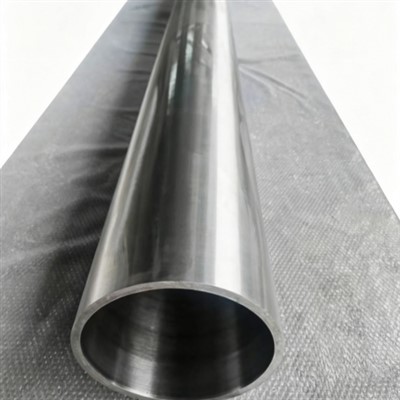
Creep is a phenomenon that occurs in materials under constant load over an extended period, leading to gradual deformation. When it comes to 2205 pipes, understanding how creep affects their long - term performance is crucial for both suppliers like us and end - users. In this blog, we'll explore the various aspects of creep and its implications for 2205 pipes.
Understanding Creep
Creep is a time - dependent deformation that happens when a material is subjected to a constant stress at an elevated temperature. It consists of three main stages: primary creep, secondary creep, and tertiary creep. During primary creep, the deformation rate decreases over time as the material adjusts to the applied stress. Secondary creep is characterized by a relatively constant deformation rate, which is often the most significant stage for long - term performance analysis. Tertiary creep is the final stage where the deformation rate accelerates rapidly, leading to eventual failure of the material.
Properties of 2205 Pipe
2205 is a duplex stainless steel pipe with a balanced microstructure of austenite and ferrite. It offers excellent corrosion resistance, high strength, and good weldability. The 2205 UNS S32205 S31803 pipes are widely used in various industries such as chemical processing, oil and gas, and desalination plants. Their unique combination of properties makes them suitable for applications where both corrosion resistance and mechanical strength are required.
How Creep Affects 2205 Pipe
Microstructural Changes
Creep can cause significant microstructural changes in 2205 pipes. At elevated temperatures, the diffusion of atoms within the material is enhanced. This can lead to the coarsening of the austenite and ferrite phases. Coarsening of the microstructure reduces the strength and toughness of the pipe. For example, the grain boundaries, which act as barriers to dislocation movement, become less effective as the grains grow larger. As a result, the pipe becomes more susceptible to deformation under stress.


Reduction in Strength
Over time, creep leads to a reduction in the strength of 2205 pipes. The constant deformation under load causes the material to lose its ability to withstand further stress. This is particularly critical in applications where the pipes are subjected to high internal pressures or external loads. For instance, in a chemical processing plant, a 2205 pipe carrying corrosive fluids at high pressure may experience a gradual loss of strength due to creep. If the strength reduction is not accounted for, it can lead to pipe failure, which can have serious safety and economic consequences.
Crack Initiation and Propagation
Creep can also promote crack initiation and propagation in 2205 pipes. As the material deforms, local stress concentrations can develop at areas of microstructural inhomogeneity or defects. These stress concentrations can act as sites for crack initiation. Once a crack forms, the creep deformation can cause the crack to propagate further. In a high - temperature and high - stress environment, the crack growth rate can be accelerated, leading to premature failure of the pipe.
Factors Influencing Creep in 2205 Pipe
Temperature
Temperature is one of the most significant factors influencing creep in 2205 pipes. As the temperature increases, the rate of atomic diffusion within the material also increases. This leads to a higher creep rate. For example, at temperatures above 300°C, the creep deformation of 2205 pipes becomes more pronounced. In applications where the pipes are exposed to high - temperature environments, such as in power plants or refineries, careful consideration must be given to the temperature - dependent creep behavior.
Stress Level
The stress level applied to the 2205 pipe also plays a crucial role in creep. Higher stress levels result in a higher creep rate. When the pipe is subjected to a constant load, the stress distribution within the pipe is not uniform. Areas of high stress, such as near welds or at points of support, are more likely to experience significant creep deformation. Therefore, proper design and installation of the pipes are essential to minimize stress concentrations.
Time
Creep is a time - dependent process. The longer the 2205 pipe is subjected to a constant load at an elevated temperature, the more significant the creep deformation will be. In long - term applications, such as in infrastructure projects that are expected to last for decades, the cumulative effect of creep over time must be considered. This requires accurate prediction of the creep behavior of the pipes based on experimental data and mathematical models.
Mitigating the Effects of Creep
Material Selection
One way to mitigate the effects of creep is through proper material selection. While 2205 pipes offer good overall performance, in applications where high - temperature and high - stress conditions are expected, alternative materials may be considered. For example, 2507 UNS S32750 S32760 pipes have a higher alloy content and better creep resistance than 2205 pipes. These pipes can be used in more demanding applications to reduce the risk of creep - related failures.
Design Optimization
Proper design of the piping system can also help to reduce the effects of creep. This includes minimizing stress concentrations by using appropriate pipe fittings, avoiding sharp bends, and ensuring proper support of the pipes. Additionally, the design should take into account the expected temperature and stress conditions over the service life of the pipes. By using finite element analysis and other engineering tools, the stress distribution within the pipes can be accurately predicted, and the design can be optimized accordingly.
Monitoring and Maintenance
Regular monitoring and maintenance of the 2205 pipes are essential to detect and address creep - related issues early. Non - destructive testing methods such as ultrasonic testing and eddy - current testing can be used to detect cracks and other defects in the pipes. If signs of significant creep deformation or damage are detected, appropriate measures can be taken, such as pipe replacement or repair.
Conclusion
Creep is a critical factor that affects the long - term performance of 2205 pipes. It can cause microstructural changes, reduce the strength of the pipes, and promote crack initiation and propagation. Factors such as temperature, stress level, and time play significant roles in the creep behavior of 2205 pipes. However, through proper material selection, design optimization, and monitoring and maintenance, the effects of creep can be mitigated.
As a 2205 pipe supplier, we understand the importance of providing high - quality pipes that can withstand the challenges of long - term use. Our team of experts is always available to assist you in selecting the right pipes for your specific application and to provide guidance on how to ensure their optimal performance. If you are interested in purchasing 2205 pipes or have any questions about their long - term performance, please feel free to contact us for a detailed discussion and to start a procurement negotiation.
References
- ASM Handbook Volume 1: Properties and Selection: Irons, Steels, and High - Performance Alloys.
- "Creep of Engineering Materials" by B. Wilshire and R. W. Evans.
- ASTM standards related to duplex stainless steel pipes.