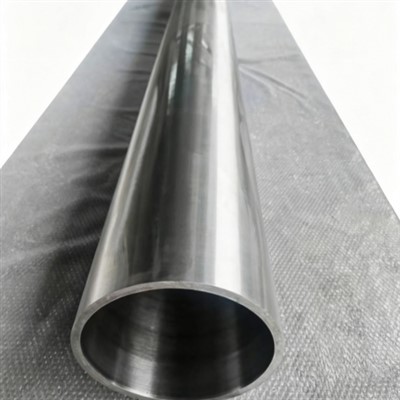
Hey there! As a supplier of 904L Stainless Steel Pipe, I often get asked about how the hardness of 904L stainless steel pipe stacks up against other materials. So, I thought I'd write this blog to share some insights on this topic.
First off, let's talk a bit about 904L stainless steel. The 904L UNS N08904 is a super austenitic stainless steel. It's known for its excellent corrosion resistance, especially in environments with high levels of chloride and sulfuric acid. But when it comes to hardness, it's not the hardest material out there, but it has its own unique properties.
One of the common materials people compare 904L with is carbon steel. Carbon steel is generally much harder than 904L stainless steel. Carbon steel gets its hardness from the carbon content. The more carbon it has, the harder it becomes. This makes carbon steel great for applications where high strength and hardness are required, like in construction for building frames and in manufacturing heavy machinery parts.
However, the high carbon content in carbon steel also makes it more prone to corrosion. Unlike 904L, which has a high chromium and nickel content that forms a passive oxide layer on the surface, protecting it from corrosion. So, if you're in an environment where corrosion is a big concern, 904L might be a better choice even though it's not as hard as carbon steel.
Another material that's often in the comparison game is 254SMo. The 254SMo UNS S31254 is also a super austenitic stainless steel, just like 904L. But it has a different chemical composition, which gives it different properties. In terms of hardness, 254SMo is a bit harder than 904L.
The higher molybdenum and nitrogen content in 254SMo contribute to its increased hardness. This makes 254SMo suitable for applications where a bit more hardness and wear resistance are needed, like in some chemical processing equipment. But again, 904L has its own advantages. It has better formability compared to 254SMo. So, if you need to bend or shape the pipe easily during the installation process, 904L might be the way to go.
Now, let's talk about titanium. Titanium is a very strong and lightweight material. It's much harder than 904L stainless steel. Titanium has a high strength - to - weight ratio, which makes it ideal for aerospace applications, where weight is a critical factor. But titanium is also much more expensive than 904L. And in some cases, the corrosion resistance of 904L might be sufficient for the application, making it a more cost - effective choice.


When it comes to measuring the hardness of these materials, there are different scales. The most common ones are the Rockwell scale and the Brinell scale. For 904L stainless steel, its hardness typically ranges from around 95 - 100 HRB on the Rockwell B scale. Carbon steel can have a much higher hardness value, depending on its carbon content. For example, high - carbon steel can have a Rockwell C hardness of over 60 HRC.
254SMo usually has a slightly higher hardness than 904L on the Rockwell scale. It might be around 100 - 105 HRB. Titanium, on the other hand, has a very high hardness, often measured in the range of 30 - 40 HRC on the Rockwell C scale.
The heat treatment also plays a role in the hardness of these materials. For 904L stainless steel, heat treatment can be used to slightly adjust its hardness. Annealing, for example, can make the material softer and more ductile. Quenching and tempering can increase the hardness to some extent, but not as significantly as in carbon steel.
In carbon steel, heat treatment has a much more dramatic effect on hardness. Through processes like quenching in water or oil, followed by tempering, the hardness of carbon steel can be precisely controlled. This is one of the reasons why carbon steel is so widely used in applications where specific hardness requirements need to be met.
For 254SMo, heat treatment can also be used to optimize its properties. But similar to 904L, the changes in hardness are not as extreme as in carbon steel.
When choosing between 904L and other materials based on hardness, you also need to consider the overall application requirements. If you're working on a project where the pipe will be exposed to a corrosive environment and doesn't need to withstand extremely high - impact loads, 904L is a great option. Its corrosion resistance and reasonable hardness make it suitable for many industrial and commercial applications.
If you need a material with high hardness and wear resistance and corrosion is not the main concern, carbon steel might be your pick. And if you're in a high - end application where weight and extreme hardness are crucial, titanium could be considered, despite its high cost.
In conclusion, the hardness of 904L stainless steel pipe is different from other materials, and each material has its own pros and cons. As a supplier of 904L Stainless Steel Pipe, I can help you make the right choice based on your specific needs. Whether you're in the chemical industry, food processing, or any other field that requires high - quality pipes, I'm here to assist you.
If you're interested in learning more about 904L stainless steel pipes or want to discuss a potential purchase, don't hesitate to reach out. I'm always happy to have a chat and help you find the best solution for your project.
References:
- ASM Handbook Volume 1: Properties and Selection: Irons, Steels, and High - Performance Alloys
- Corrosion Resistance of Stainless Steels by David A. Jones