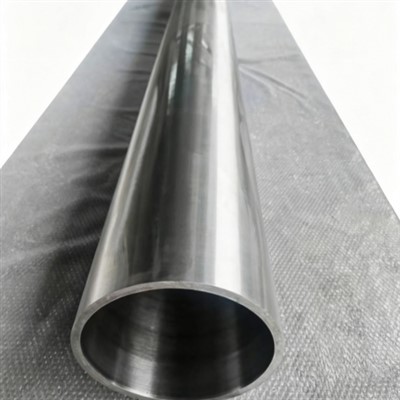
Hey there! As a stainless steel pipe supplier, I often get asked about the vibration - damping properties of stainless steel pipes. So, I thought I'd write this blog to share some insights on this topic.
First off, let's understand what vibration damping is. In simple terms, vibration damping is the ability of a material to reduce the amplitude of vibrations over time. When it comes to stainless steel pipes, this property is crucial in many applications. For example, in industrial settings where pipes are used to transport fluids or gases under pressure, vibrations can occur due to fluid flow, machinery operation, or external forces. If these vibrations are not properly damped, they can lead to various problems such as noise pollution, premature wear and tear of the pipes, and even structural damage in extreme cases.


Now, let's dig into the factors that affect the vibration - damping properties of stainless steel pipes.
Material Composition
The chemical composition of stainless steel plays a significant role in its vibration - damping capabilities. Different grades of stainless steel have different amounts of alloying elements, which can influence how the material responds to vibrations.
For instance, TP347H UNS S34709 [/stainless-steel-pipe/tp347h-stainless-steel-pipe.html] is a high - temperature stainless steel alloy. It contains chromium, nickel, and niobium. The presence of these elements gives it good mechanical properties, but it also affects its vibration - damping characteristics. The crystal structure formed by these alloying elements can absorb and dissipate some of the vibrational energy, reducing the overall amplitude of the vibrations.
SS304L UNS S30403 [/stainless-steel-pipe/304l-stainless-steel-tube.html] is one of the most commonly used stainless steel grades. It has a relatively high chromium and nickel content. The austenitic structure of SS304L provides good corrosion resistance, but it also has some inherent vibration - damping properties. The atomic arrangement in the austenitic phase allows for some internal friction, which helps in dissipating the energy of the vibrations.
SS310 UNS S31000 [/stainless-steel-pipe/310-ss-pipe.html] is known for its high - temperature resistance. With a high chromium and nickel content, it forms a stable oxide layer on its surface, protecting it from oxidation at elevated temperatures. In terms of vibration damping, the alloying elements contribute to the material's ability to absorb and dampen vibrations. The complex atomic interactions within the alloy help in converting the vibrational energy into heat energy, which is then dissipated.
Pipe Wall Thickness
The thickness of the pipe wall also has a direct impact on the vibration - damping properties. Generally, thicker - walled pipes tend to have better vibration - damping capabilities. This is because a thicker wall provides more mass and material to absorb and dissipate the vibrational energy. When a vibration is applied to a pipe, the energy has to travel through the material. A thicker wall offers more resistance to the propagation of the vibration, and more energy is absorbed within the material itself.
However, it's important to note that increasing the wall thickness also comes with some drawbacks. Thicker pipes are heavier, which can increase the overall weight of the system and may require more robust support structures. They are also more expensive to manufacture and install. So, there needs to be a balance between the desired vibration - damping performance and other practical considerations.
Pipe Geometry
The shape and size of the pipe can affect its vibration - damping properties. For example, a pipe with a larger diameter may have different vibration characteristics compared to a smaller - diameter pipe. A larger - diameter pipe has a greater surface area and more volume, which can allow for more energy absorption. Additionally, the cross - sectional shape of the pipe can play a role. Pipes with non - circular cross - sections, such as oval or rectangular pipes, may have different vibration modes and damping capabilities compared to circular pipes.
In some applications, the length of the pipe is also a factor. Longer pipes are more prone to vibrations, and the damping properties need to be carefully considered to prevent excessive vibration amplitudes. In long - pipe systems, additional damping mechanisms may be required, such as using vibration - damping supports or adding internal baffles.
Surface Finish
The surface finish of the stainless steel pipe can also influence its vibration - damping properties. A smooth surface finish can reduce the friction between the pipe and its surrounding environment, which may affect the way vibrations are transmitted. On the other hand, a rougher surface finish can introduce some additional internal friction within the material, which can help in dissipating the vibrational energy.
However, the impact of surface finish on vibration damping is relatively minor compared to other factors such as material composition and wall thickness. But in some cases, where precise control of vibrations is required, the surface finish may need to be taken into account.
Applications and the Importance of Vibration Damping
In the oil and gas industry, stainless steel pipes are used to transport hydrocarbons over long distances. Vibrations can occur due to the flow of the fluid, the operation of pumps and compressors, and external environmental factors such as wind and seismic activity. Good vibration - damping properties are essential to prevent fatigue failure of the pipes, which can lead to costly leaks and environmental hazards.
In the construction industry, stainless steel pipes are used in building structures for plumbing, HVAC systems, and structural support. Vibration damping helps in reducing noise and preventing damage to the building components. For example, in high - rise buildings, the wind can cause the pipes to vibrate. If these vibrations are not damped, they can be transmitted to the building structure, causing discomfort to the occupants and potentially damaging the building's integrity over time.
In the automotive and aerospace industries, stainless steel pipes are used in exhaust systems, fuel lines, and hydraulic systems. Vibration damping is crucial to ensure the reliability and performance of these systems. Excessive vibrations can lead to premature wear of the components, reduced fuel efficiency, and even safety issues.
Measuring Vibration Damping
There are several methods to measure the vibration - damping properties of stainless steel pipes. One common method is the free - vibration decay test. In this test, the pipe is excited into vibration, and then the decay of the vibration amplitude over time is measured. The rate of decay is related to the damping ratio of the material. A higher damping ratio indicates better vibration - damping capabilities.
Another method is the forced - vibration test, where a known force is applied to the pipe at a specific frequency, and the response of the pipe is measured. By analyzing the amplitude and phase of the response, the damping properties of the pipe can be determined.
Conclusion
In conclusion, the vibration - damping properties of stainless steel pipes are influenced by various factors, including material composition, pipe wall thickness, geometry, and surface finish. Understanding these factors is crucial for selecting the right stainless steel pipe for a particular application.
As a stainless steel pipe supplier, I can help you choose the best - suited pipes based on your specific vibration - damping requirements. Whether you need pipes for industrial, construction, automotive, or aerospace applications, I have a wide range of stainless steel grades and pipe specifications to offer.
If you're interested in learning more about our stainless steel pipes or have specific requirements for your project, feel free to reach out. We can discuss your needs in detail and find the perfect solution for you. Let's work together to ensure your project has the best - performing and most reliable stainless steel pipes with optimal vibration - damping properties.
References
- ASM Handbook Volume 1: Properties and Selection: Irons, Steels, and High - Performance Alloys
- Stainless Steel: A Practical Guide by George E. Totten and D. Scott MacKenzie