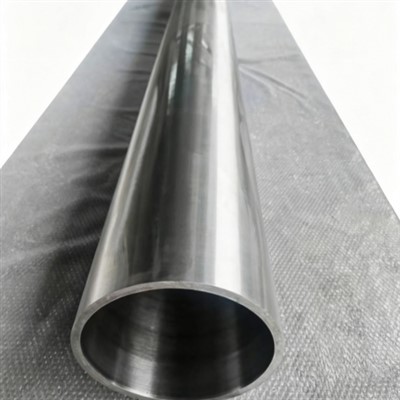
As a reputable supplier of 316L stainless steel pipes, I often encounter inquiries about the coefficient of thermal expansion of these pipes. This property is crucial in various applications, especially those involving temperature fluctuations. In this blog post, I'll delve into the coefficient of thermal expansion of 316L stainless steel pipes, its significance, and how it compares to other materials.
Understanding the Coefficient of Thermal Expansion
The coefficient of thermal expansion (CTE) is a measure of how much a material expands or contracts when its temperature changes. It is defined as the fractional change in length or volume per unit change in temperature. For linear expansion, the coefficient of linear thermal expansion (CLTE) is commonly used, which is expressed in units of per degree Celsius (°C⁻¹) or per degree Fahrenheit (°F⁻¹).
In the case of 316L stainless steel pipes, the CLTE is an important parameter because it affects the dimensional stability of the pipes under different temperature conditions. When the temperature of the pipe increases, it expands, and when the temperature decreases, it contracts. If the expansion or contraction is not properly accounted for in the design and installation of the piping system, it can lead to issues such as stress buildup, leaks, and even structural failure.
Coefficient of Thermal Expansion of 316L Stainless Steel Pipe
The coefficient of linear thermal expansion of 316L stainless steel typically ranges from approximately 16.0 x 10⁻⁶ /°C to 17.3 x 10⁻⁶ /°C over a temperature range of 20°C to 100°C. This value can vary slightly depending on the specific composition and manufacturing process of the stainless steel.
Compared to other materials, 316L stainless steel has a relatively moderate coefficient of thermal expansion. For example, carbon steel has a higher CLTE, typically around 12.0 x 10⁻⁶ /°C to 13.0 x 10⁻⁶ /°C, while some aluminum alloys have even higher values, ranging from 22.0 x 10⁻⁶ /°C to 24.0 x 10⁻⁶ /°C. The moderate CTE of 316L stainless steel makes it a suitable choice for applications where dimensional stability is important, especially in environments with moderate temperature variations.
Significance in Applications
The coefficient of thermal expansion of 316L stainless steel pipes is particularly important in applications such as chemical processing, food and beverage production, and pharmaceutical manufacturing. In these industries, the pipes are often exposed to a wide range of temperatures during the production process. For example, in a chemical reactor, the temperature can vary significantly during different stages of the reaction. If the pipes used in the reactor are made of a material with a high CTE, they may expand or contract too much, leading to leaks or other problems.
In addition, the CTE also affects the performance of the pipes in high-temperature applications. In applications where the pipes are exposed to high temperatures for extended periods, such as in power generation plants or industrial furnaces, the expansion and contraction of the pipes can cause stress on the joints and connections. If the CTE is not properly considered, it can lead to premature failure of the piping system.
Comparison with Other Stainless Steel Grades
It's also interesting to compare the coefficient of thermal expansion of 316L stainless steel with other stainless steel grades. For instance, SS310 UNS S31000 has a different CTE compared to 316L. SS310 is a high-temperature stainless steel grade, and its CTE is typically higher than that of 316L. This is because SS310 is designed to withstand higher temperatures, and the higher CTE allows it to expand and contract more freely at elevated temperatures without causing excessive stress.
On the other hand, some other stainless steel grades may have lower CTEs. For example, certain duplex stainless steels have relatively low coefficients of thermal expansion, which makes them suitable for applications where dimensional stability is critical, even under extreme temperature conditions.
Impact on Pipe Design and Installation
When designing and installing a piping system using 316L stainless steel pipes, the coefficient of thermal expansion must be taken into account. One common approach is to use expansion joints or flexible connectors in the piping system to accommodate the expansion and contraction of the pipes. These joints allow the pipes to move freely without causing excessive stress on the joints and connections.
Another important consideration is the layout of the piping system. The pipes should be installed in a way that allows for proper expansion and contraction. For example, the pipes should be supported at regular intervals to prevent sagging or excessive movement. In addition, the pipes should be installed with sufficient clearance to allow for expansion without interfering with other components of the system.
Our 316L Stainless Steel Pipe Offerings
As a supplier of 316L stainless steel pipes, we offer a wide range of products to meet the diverse needs of our customers. Our pipes are made from high-quality 316L stainless steel, which has excellent corrosion resistance, high strength, and good formability. We also offer different sizes, wall thicknesses, and finishes to suit various applications.
In addition to standard round pipes, we also supply Octagonal Stainless Steel Pipe for special applications. Our octagonal pipes are precision-engineered to meet the highest quality standards and are available in a variety of sizes and specifications.


Conclusion
The coefficient of thermal expansion of 316L stainless steel pipes is an important property that affects their performance and reliability in various applications. By understanding the CTE and taking it into account in the design and installation of the piping system, you can ensure that the pipes operate safely and efficiently, even under changing temperature conditions.
If you are in the market for high-quality 316L stainless steel pipes, look no further. Our company is committed to providing the best products and services to our customers. We have a team of experienced professionals who can assist you in selecting the right pipes for your specific application and provide you with expert advice on installation and maintenance.
Contact us today to discuss your requirements and start a procurement discussion. We look forward to working with you to meet your stainless steel pipe needs.
References
- ASM Handbook, Volume 1: Properties and Selection: Irons, Steels, and High-Performance Alloys
- ASTM A312/A312M - Standard Specification for Seamless, Welded, and Heavily Cold Worked Austenitic Stainless Steel Pipes