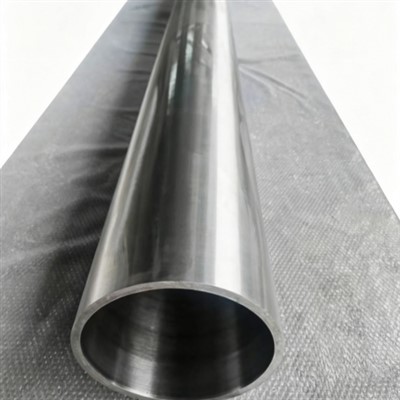
Alloy 825 is a nickel-iron-chromium alloy with excellent resistance to corrosion in various environments, making it a popular choice for applications in industries such as chemical processing, oil and gas, and marine engineering. As a leading supplier of Alloy 825 pipes, I am often asked about the production process of these pipes. In this blog post, I will take you through the step-by-step process of manufacturing Alloy 825 pipes.
Step 1: Raw Material Selection
The first and most crucial step in the production of Alloy 825 pipes is the selection of high-quality raw materials. The primary elements in Alloy 825 include nickel (min. 38%), iron (22 - 32%), chromium (19.5 - 23.5%), molybdenum (2.5 - 3.5%), copper (1.5 - 3.0%), and titanium (0.6 - 1.2%). These elements are carefully chosen to ensure the desired chemical composition and properties of the final product.
We source our raw materials from trusted suppliers who adhere to strict quality control standards. The raw materials are inspected for purity, composition, and other physical properties before they are used in the production process. This ensures that the Alloy 825 pipes we produce meet or exceed the industry standards.
Step 2: Melting and Refining
Once the raw materials are selected, they are melted in an electric arc furnace or a vacuum induction melting furnace. The melting process is carefully controlled to ensure that the elements are evenly distributed and that the desired chemical composition is achieved.
After melting, the molten alloy is refined to remove impurities such as sulfur, phosphorus, and other non-metallic inclusions. Refining is typically done using techniques such as argon-oxygen decarburization (AOD) or vacuum arc remelting (VAR). These processes help to improve the purity and homogeneity of the alloy, which in turn enhances the mechanical and corrosion resistance properties of the final product.
Step 3: Casting
After refining, the molten alloy is cast into ingots or billets. Casting is a critical step in the production process as it determines the shape and size of the initial material for further processing. The casting process is carefully controlled to ensure that the ingots or billets are free from defects such as porosity, cracks, and inclusions.
We use advanced casting techniques such as continuous casting or die casting to produce high-quality ingots and billets. Continuous casting is a preferred method as it allows for the production of long, uniform lengths of material with consistent properties. Die casting, on the other hand, is used for producing complex shapes and sizes.
Step 4: Hot Working
Once the ingots or billets are cast, they are hot worked to reduce their cross-sectional area and improve their mechanical properties. Hot working is typically done at temperatures between 1100°C and 1200°C using processes such as forging, rolling, or extrusion.
Forging is a process in which the ingot or billet is hammered or pressed to shape it into the desired form. Rolling is a process in which the material is passed through a series of rollers to reduce its thickness and increase its length. Extrusion is a process in which the material is forced through a die to produce a specific shape.
Hot working helps to refine the grain structure of the alloy, which improves its strength, toughness, and ductility. It also helps to eliminate any internal defects that may have been present in the cast material.
Step 5: Cold Working
After hot working, the material is cold worked to further improve its mechanical properties and dimensional accuracy. Cold working is typically done at room temperature using processes such as cold drawing, cold rolling, or cold extrusion.
Cold drawing is a process in which the material is pulled through a die to reduce its diameter and increase its length. Cold rolling is a process in which the material is passed through a series of rollers to reduce its thickness and improve its surface finish. Cold extrusion is a process in which the material is forced through a die to produce a specific shape.
Cold working helps to increase the strength and hardness of the alloy by introducing dislocations into the crystal structure. It also helps to improve the surface finish and dimensional accuracy of the material.
Step 6: Heat Treatment
After cold working, the material is heat treated to relieve the internal stresses introduced during the cold working process and to improve its mechanical properties. Heat treatment is typically done at temperatures between 700°C and 900°C using processes such as annealing, normalizing, or quenching and tempering.
Annealing is a process in which the material is heated to a specific temperature and then slowly cooled to room temperature. This helps to relieve the internal stresses and to soften the material, making it easier to machine and form. Normalizing is a process in which the material is heated to a specific temperature and then cooled in air. This helps to refine the grain structure and to improve the mechanical properties of the material. Quenching and tempering is a process in which the material is heated to a specific temperature and then rapidly cooled in a quenching medium such as water or oil. This helps to harden the material, and then it is tempered at a lower temperature to improve its toughness and ductility.
Step 7: Machining and Finishing
After heat treatment, the material is machined to the desired shape and size. Machining is typically done using processes such as turning, milling, drilling, or grinding. These processes help to remove any excess material and to achieve the required dimensional accuracy and surface finish.


Once the machining is complete, the pipes are finished to improve their appearance and corrosion resistance. Finishing processes may include polishing, buffing, or coating. Polishing and buffing help to improve the surface finish of the pipes, while coating helps to protect the pipes from corrosion and other environmental factors.
Step 8: Quality Control
Throughout the production process, strict quality control measures are implemented to ensure that the Alloy 825 pipes meet or exceed the industry standards. Quality control starts with the inspection of the raw materials and continues through every stage of the production process, including melting, casting, hot working, cold working, heat treatment, machining, and finishing.
We use a variety of testing methods to ensure the quality of our Alloy 825 pipes. These methods include chemical analysis, mechanical testing, non-destructive testing, and corrosion testing. Chemical analysis is used to determine the chemical composition of the alloy, while mechanical testing is used to evaluate the strength, toughness, and ductility of the pipes. Non-destructive testing methods such as ultrasonic testing, magnetic particle testing, and radiographic testing are used to detect any internal defects in the pipes. Corrosion testing is used to evaluate the corrosion resistance of the pipes in various environments.
Step 9: Packing and Shipping
Once the Alloy 825 pipes pass the quality control tests, they are packed and shipped to our customers. We use high-quality packaging materials to protect the pipes during transportation and storage. The pipes are typically packed in wooden crates or steel pallets to prevent damage during handling and shipping.
We offer a variety of shipping options to meet the needs of our customers. We can ship the pipes by sea, air, or land, depending on the location and urgency of the order. We also provide tracking information to our customers so that they can monitor the progress of their orders.
Other Related Alloys
In addition to Alloy 825, we also supply other high-performance alloys such as Inconel 625 UNS N06625, Hastelloy C22 UNS N06022, and Hastelloy C276 UNS N10276. These alloys have similar properties to Alloy 825 and are also widely used in various industries.
Contact Us for Your Alloy 825 Pipe Needs
If you are in the market for high-quality Alloy 825 pipes, look no further. As a trusted supplier, we are committed to providing our customers with the best products and services. Our Alloy 825 pipes are manufactured using the latest technology and strict quality control measures to ensure that they meet or exceed your expectations.
Whether you need Alloy 825 pipes for a small project or a large-scale industrial application, we can help. Contact us today to discuss your requirements and to get a quote. We look forward to working with you and to meeting your Alloy 825 pipe needs.
References
- ASM Handbook, Volume 2: Properties and Selection: Nonferrous Alloys and Special-Purpose Materials.
- Metals Handbook Desk Edition, Third Edition.
- Corrosion Resistance of Stainless Steels, Second Edition by George S. Maloy.