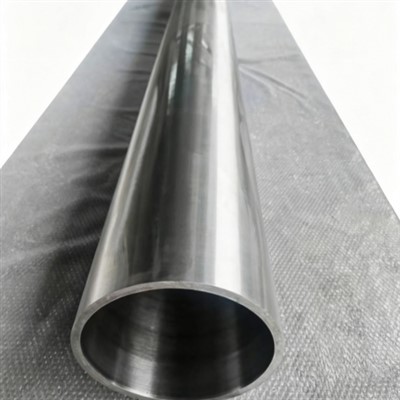
The smoothness of the inner surface of stainless coil tubing is a critical characteristic that significantly impacts its performance across various applications. As a leading supplier of stainless coil tubing, I've witnessed firsthand how this seemingly subtle attribute can make a substantial difference in the efficiency, durability, and overall functionality of the tubing.
Understanding Smoothness in Stainless Coil Tubing
Smoothness refers to the degree of evenness and lack of irregularities on the inner surface of the tubing. It is typically measured in terms of surface roughness, which quantifies the microscopic peaks and valleys on the surface. A smoother inner surface means fewer peaks and valleys, resulting in a more uniform and consistent flow path for fluids or gases passing through the tubing.
The smoothness of stainless coil tubing is influenced by several factors during the manufacturing process. The quality of the raw materials, the precision of the forming and welding techniques, and the effectiveness of the finishing processes all play crucial roles in determining the final smoothness of the inner surface. For instance, using high - grade stainless steel with a fine grain structure can contribute to a smoother surface. Advanced forming methods that minimize deformation and stress can also help maintain the integrity of the inner surface.
Importance of Inner Surface Smoothness
Fluid Flow Efficiency
One of the primary benefits of a smooth inner surface is improved fluid flow efficiency. When fluids flow through tubing, a rough inner surface can cause turbulence, which increases friction and resistance. This, in turn, requires more energy to pump the fluid, leading to higher operating costs. In contrast, a smooth surface allows for laminar flow, where the fluid moves in parallel layers with minimal disruption. This reduces friction and pressure drop, enabling more efficient fluid transfer. For example, in a chemical processing plant, smooth - walled stainless coil tubing can enhance the flow of corrosive chemicals, reducing energy consumption and improving the overall productivity of the process.
Corrosion Resistance
A smooth inner surface also enhances the corrosion resistance of stainless coil tubing. Rough surfaces can trap moisture, chemicals, and other contaminants, creating an environment conducive to corrosion. These trapped substances can initiate pitting corrosion, which can compromise the integrity of the tubing over time. A smooth surface, on the other hand, is less likely to trap contaminants, making it more resistant to corrosion. This is particularly important in applications where the tubing is exposed to harsh chemicals or high - humidity environments, such as in marine or food processing industries.
Hygiene and Cleanability
In industries where hygiene is of utmost importance, such as the pharmaceutical, food, and beverage industries, the smoothness of the inner surface is crucial. A smooth surface is easier to clean and sanitize, as there are fewer crevices and irregularities where bacteria and other microorganisms can accumulate. This helps prevent the growth of harmful pathogens and ensures the safety and quality of the products being processed. For example, in a dairy processing plant, smooth - inner - surfaced stainless coil tubing can be easily cleaned to meet strict hygiene standards, reducing the risk of product contamination.
Measuring Inner Surface Smoothness
There are several methods available to measure the smoothness of the inner surface of stainless coil tubing. One common method is the use of profilometers, which measure the surface roughness by tracing a stylus across the surface. The stylus detects the peaks and valleys, and the instrument calculates the surface roughness parameters, such as Ra (average roughness) and Rz (maximum height of the profile). Another method is optical microscopy, which can provide a visual representation of the surface and allow for the measurement of surface features at a microscopic level.
Impact of Different Stainless Steel Grades on Smoothness
Different grades of stainless steel can have varying effects on the smoothness of the inner surface of the coil tubing. For example, 430 Stainless Steel Pipe is a ferritic stainless steel known for its good formability and corrosion resistance. It can achieve a relatively smooth inner surface, making it suitable for applications where moderate smoothness is required.
309 Stainless Steel Pipe, on the other hand, is an austenitic stainless steel with high chromium and nickel content. It offers excellent corrosion resistance and can maintain a smooth inner surface even in harsh environments. This makes it ideal for applications in high - temperature and corrosive settings, such as in exhaust systems or chemical reactors.
TP316L Seamless Pipe is a low - carbon version of 316 stainless steel, which is highly resistant to corrosion, especially in chloride - containing environments. The seamless construction of TP316L tubing can contribute to a very smooth inner surface, making it a popular choice for applications in the pharmaceutical, food, and beverage industries, where hygiene and corrosion resistance are critical.
Our Commitment as a Supplier
As a stainless coil tubing supplier, we are committed to providing tubing with the highest level of inner surface smoothness. We use state - of - the - art manufacturing processes and quality control measures to ensure that each piece of tubing meets or exceeds industry standards. Our team of experts carefully selects the appropriate stainless steel grades and manufacturing techniques based on the specific requirements of our customers.
We also offer customization options to meet the unique needs of different applications. Whether you need tubing with a specific level of smoothness, a particular diameter, or a custom length, we can work with you to deliver the perfect solution. Our dedication to quality and customer satisfaction has earned us a reputation as a reliable and trusted supplier in the industry.


Contact Us for Your Tubing Needs
If you are in the market for high - quality stainless coil tubing with exceptional inner surface smoothness, we invite you to contact us. Our experienced sales team is ready to discuss your requirements and provide you with detailed information about our products and services. We can also offer technical support and guidance to help you choose the right tubing for your application. Let us be your partner in achieving optimal performance and efficiency in your projects.
References
- ASM Handbook, Volume 13A: Corrosion: Fundamentals, Testing, and Protection. ASM International.
- ISO 4287: Geometrical Product Specifications (GPS) - Surface texture: Profile method - Terms, definitions and surface texture parameters. International Organization for Standardization.
- Tuthill, R. W. (2000). Handbook of Stainless Steels. McGraw - Hill.