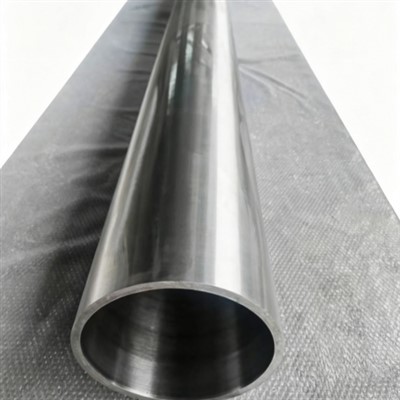
Surface roughness is a crucial factor in the quality assessment of machined components, especially for pipes made from high - performance materials like S32750. As a supplier of S32750 pipes, I've witnessed firsthand the importance of understanding the surface roughness after machining this material. In this blog, we'll delve into what surface roughness means, how it's measured, and what to expect when machining S32750 pipes.
Understanding Surface Roughness
Surface roughness refers to the irregularities on the surface of a material at a microscopic level. These irregularities can be caused by various factors during the machining process, such as the type of cutting tool, machining parameters (feed rate, cutting speed, depth of cut), and the material properties themselves. In the context of S32750 pipes, surface roughness can impact the pipe's performance in several ways.
A smooth surface finish can enhance the corrosion resistance of S32750 pipes. Since S32750 is a super duplex stainless steel known for its excellent corrosion resistance in harsh environments, a smoother surface reduces the likelihood of corrosion initiation sites. It also improves the flow characteristics of fluids inside the pipe, reducing friction and pressure drop. On the other hand, a rough surface may lead to increased turbulence, which can cause erosion and wear over time.
Measuring Surface Roughness
There are several methods to measure surface roughness, but the most commonly used parameter is Ra, which stands for arithmetic average roughness. Ra represents the average deviation of the surface profile from the mean line within a specified sampling length. It is measured in micrometers (μm) or micro - inches (μin).
To measure Ra, a profilometer is typically used. This instrument traces the surface of the material with a stylus and records the vertical deviations of the surface profile. The data collected is then processed to calculate the Ra value. Other parameters, such as Rz (maximum height of the profile) and Rq (root - mean - square roughness), are also used in some applications, depending on the specific requirements of the component.
Machining S32750 Pipes and Surface Roughness
S32750 is a challenging material to machine due to its high strength, hardness, and work - hardening tendency. During the machining process, the cutting forces can cause significant deformation of the material, leading to a rougher surface finish if not properly controlled.
The choice of cutting tool is critical in achieving a good surface finish on S32750 pipes. Carbide cutting tools are commonly used because of their high hardness and wear resistance. Coated carbide tools, in particular, can provide better performance by reducing friction and heat generation at the cutting edge.
Machining parameters also play a vital role. A lower feed rate generally results in a smoother surface finish, as it reduces the amount of material removed per revolution of the cutting tool. Similarly, a higher cutting speed can improve the surface quality by reducing the built - up edge formation. However, the cutting speed needs to be carefully optimized to avoid excessive tool wear and heat generation, which can also affect the surface roughness.
The depth of cut should also be considered. A smaller depth of cut can lead to a better surface finish, but it may increase the machining time. Therefore, a balance needs to be struck between surface quality and machining efficiency.
Factors Affecting Surface Roughness in S32750 Pipe Machining
- Material properties: The high strength and work - hardening nature of S32750 can cause the material to deform plastically during machining, leading to a rougher surface. The presence of hard particles and inclusions in the material can also cause tool wear and surface irregularities.
- Cutting tool wear: As the cutting tool wears, its cutting edge becomes dull, which increases the cutting forces and can result in a rougher surface finish. Regular tool inspection and replacement are necessary to maintain a consistent surface quality.
- Coolant and lubrication: Using an appropriate coolant or lubricant can significantly improve the surface finish during machining. Coolants help to reduce heat generation, flush away chips, and lubricate the cutting interface, reducing friction and tool wear.
Typical Surface Roughness Values for Machined S32750 Pipes
The typical Ra values for machined S32750 pipes can vary depending on the machining process and the specific requirements of the application. In general, for turning operations, Ra values can range from 1.6 to 6.3 μm. For milling operations, the Ra values may be slightly higher, typically ranging from 3.2 to 12.5 μm.
However, with proper selection of cutting tools, machining parameters, and process control, it is possible to achieve lower Ra values. For applications where a very smooth surface finish is required, such as in the food and beverage industry or high - precision fluid handling systems, additional finishing operations like grinding or polishing may be necessary.
Comparison with Other Duplex Stainless Steel Pipes
When comparing S32750 pipes with other duplex stainless steel pipes, such as 2205 UNS S32205 S31803, S32750 generally requires more careful machining to achieve a similar surface finish. 2205 duplex stainless steel has lower strength and hardness compared to S32750, making it relatively easier to machine and obtain a smoother surface.
On the other hand, 2507 UNS S32750 S32760 shares similar material properties with S32750, and the surface roughness after machining will be affected by the same factors. However, the specific applications and requirements for these two materials may vary, which will also influence the acceptable surface roughness values.


Conclusion
Surface roughness is an important aspect of the quality of machined S32750 pipes. Understanding the factors that affect surface roughness and how to control them is essential for achieving the desired surface finish. As a supplier of S32750 pipes, we are committed to providing high - quality products with excellent surface finishes.
If you are in the market for S32750 pipes or have specific requirements regarding surface roughness, we would be more than happy to assist you. Our team of experts can provide technical support and advice on machining processes to ensure that our pipes meet your exact needs. Feel free to contact us for more information and to start a procurement discussion.
References
- ASME B46.1 - 2019, “Surface Texture (Surface Roughness, Waviness, and Lay)”
- ISO 4287:1997, “Geometrical Product Specifications (GPS) - Surface texture: Profile method - Terms, definitions and surface texture parameters”
- “Machining of Stainless Steels” by The Nickel Institute