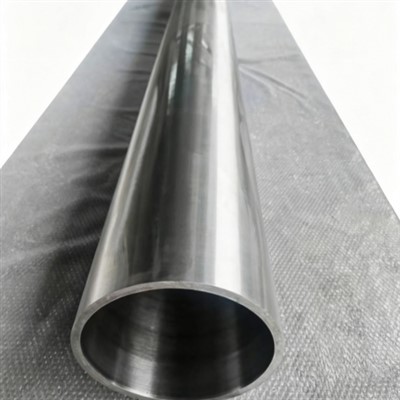
As a supplier of duplex stainless pipes, I often get asked about the nitrogen content in these pipes and its functions. Nitrogen is a crucial alloying element in duplex stainless steel, and understanding its role can help customers make informed decisions when choosing the right pipes for their applications. In this blog post, I'll delve into the nitrogen content in duplex stainless pipes and explain its significance.
Nitrogen Content in Duplex Stainless Pipes
Duplex stainless steel is a type of stainless steel that contains a two - phase microstructure consisting of ferrite and austenite. The nitrogen content in duplex stainless pipes typically ranges from 0.1% to 0.3%. This may seem like a small amount, but it has a profound impact on the properties of the steel.


In the popular 2205 UNS S32205 S31803 duplex stainless pipe, the nitrogen content is usually around 0.14% - 0.20%. For the 2507 UNS S32750 S32760 super - duplex stainless pipe, the nitrogen content can be up to 0.3%. These specific nitrogen levels are carefully controlled during the manufacturing process to achieve the desired material properties.
Functions of Nitrogen in Duplex Stainless Pipes
1. Strengthening the Austenite Phase
One of the primary functions of nitrogen in duplex stainless pipes is to stabilize and strengthen the austenite phase. In the two - phase structure of duplex stainless steel, the ferrite phase is generally stronger but less ductile, while the austenite phase provides better ductility and toughness. Nitrogen acts as an austenite stabilizer, promoting the formation of austenite during solidification and heat treatment.
When nitrogen is dissolved in the austenite phase, it forms interstitial solid solutions. These interstitial atoms of nitrogen interact with the crystal lattice of the austenite, impeding the movement of dislocations. As a result, the strength of the austenite phase is increased, which in turn enhances the overall strength of the duplex stainless pipe. This is particularly important in applications where the pipes are subjected to high - pressure or high - stress conditions, such as in oil and gas pipelines or chemical processing plants.
2. Improving Pitting and Crevice Corrosion Resistance
Nitrogen significantly improves the pitting and crevice corrosion resistance of duplex stainless pipes. Pitting corrosion is a localized form of corrosion that occurs when small holes or pits form on the surface of the metal, while crevice corrosion happens in narrow gaps or crevices where the flow of oxygen and corrosive agents is restricted.
Nitrogen helps to inhibit the initiation and propagation of these forms of corrosion. It does this by promoting the formation of a more stable and protective passive film on the surface of the steel. The passive film acts as a barrier between the metal and the corrosive environment, preventing the penetration of corrosive agents. Additionally, nitrogen can interact with chloride ions in the environment, reducing their ability to attack the metal surface and initiate pitting corrosion.
In environments with high chloride concentrations, such as seawater or certain chemical solutions, the addition of nitrogen in duplex stainless pipes can make a significant difference in their corrosion resistance. This makes duplex stainless pipes with appropriate nitrogen content a popular choice for marine applications, desalination plants, and other industries where corrosion is a major concern.
3. Enhancing Weldability
Weldability is an important consideration in many applications of duplex stainless pipes, as pipes often need to be joined together during installation. Nitrogen plays a positive role in improving the weldability of duplex stainless steel.
During the welding process, the high temperatures can cause changes in the microstructure of the steel. Without the presence of nitrogen, there is a risk of excessive ferrite formation in the weld area, which can lead to reduced corrosion resistance and mechanical properties. Nitrogen helps to maintain the proper balance of ferrite and austenite in the weld metal and the heat - affected zone. It promotes the formation of austenite during the solidification of the weld pool, ensuring that the weld has similar properties to the base metal.
This results in stronger and more corrosion - resistant welds, reducing the likelihood of weld - related failures. As a result, duplex stainless pipes with the right nitrogen content can be more easily welded, which simplifies the installation process and reduces costs.
4. Increasing Toughness
Toughness is the ability of a material to absorb energy and deform plastically before fracturing. Nitrogen contributes to the increased toughness of duplex stainless pipes. By strengthening the austenite phase and maintaining the appropriate phase balance between ferrite and austenite, nitrogen helps the material to better withstand impact and dynamic loads.
In applications where the pipes may be subject to sudden shocks or vibrations, such as in offshore platforms or transportation pipelines, the enhanced toughness provided by nitrogen is crucial. It reduces the risk of brittle fracture, which could have catastrophic consequences for the entire system.
Considerations for Different Applications
The nitrogen content in duplex stainless pipes should be carefully selected based on the specific application requirements. For less demanding applications where moderate strength and corrosion resistance are sufficient, a lower nitrogen content like that in the 2205 duplex stainless pipe may be adequate. These pipes are often used in general structural applications, water treatment plants, and some food processing industries.
On the other hand, for highly corrosive environments or applications that require high strength and toughness, such as in the oil and gas industry for offshore drilling or in chemical plants handling aggressive chemicals, the higher nitrogen content of super - duplex stainless pipes like 2507 is more appropriate.
Conclusion
In conclusion, nitrogen is an essential alloying element in duplex stainless pipes, with multiple important functions. It strengthens the austenite phase, improves pitting and crevice corrosion resistance, enhances weldability, and increases toughness. As a supplier of duplex stainless pipes, I understand the importance of providing pipes with the right nitrogen content to meet the diverse needs of our customers.
Whether you are in the oil and gas industry, marine engineering, chemical processing, or any other field that requires high - performance pipes, choosing the appropriate duplex stainless pipe with the correct nitrogen content is crucial for the long - term success and reliability of your projects. If you are interested in learning more about our duplex stainless pipes or would like to discuss your specific requirements, please feel free to contact us for a detailed consultation. We are here to help you select the best - suited pipes for your applications and look forward to the opportunity to work with you.
References
- ASM Handbook Volume 13A: Corrosion, ASM International.
- Duplex Stainless Steels: Fundamentals and Applications, Edited by R. K. Ray and P. K. De.
- Stainless Steel for Design Engineers, George E. Totten and David P. Whiteman.