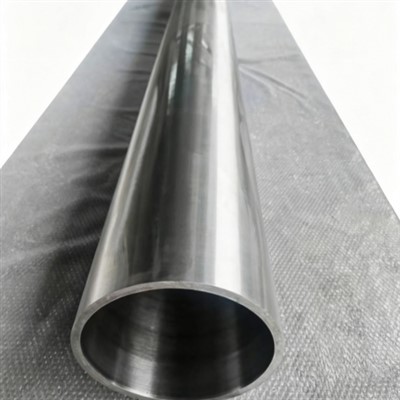
Hey there! I'm a supplier of nickel pipes, and today I wanna chat about the weldability of nickel pipes with different welding methods. Nickel pipes are super versatile and are used in a bunch of industries like chemical processing, aerospace, and marine engineering. But getting the welding right is crucial to ensure the pipes work well and last long.
Let's start by understanding why nickel pipes are so special. Nickel has some awesome properties. It's highly resistant to corrosion, can handle high temperatures, and has good mechanical strength. These features make nickel pipes a top choice in harsh environments. But when it comes to welding, things can get a bit tricky.
TIG Welding of Nickel Pipes
TIG (Tungsten Inert Gas) welding is one of the most popular methods for welding nickel pipes. It's known for its precision and ability to produce high - quality welds. In TIG welding, a non - consumable tungsten electrode creates an arc that melts the base metal and filler material. An inert gas, usually argon, is used to protect the weld pool from atmospheric contamination.
One of the big advantages of TIG welding nickel pipes is that it allows for better control of the heat input. This is important because nickel has a relatively high thermal conductivity, and too much heat can lead to issues like distortion and cracking. With TIG welding, you can adjust the amperage and the speed of the weld to get the perfect balance.
However, TIG welding is a slow process. It requires a high level of skill from the welder, and it can be time - consuming, especially when welding large - diameter nickel pipes. Also, the equipment for TIG welding can be a bit expensive.
When welding nickel pipes using TIG, it's essential to use the right filler material. For example, when welding Alloy 20 Pipe, you need a filler that has similar chemical composition to ensure good compatibility and weld quality.
MIG Welding of Nickel Pipes
MIG (Metal Inert Gas) welding is another option for welding nickel pipes. In MIG welding, a consumable wire electrode is fed through a welding gun, and an inert gas is used to shield the weld pool.


MIG welding is faster than TIG welding, which makes it a great choice for high - volume production. It's also relatively easier to learn compared to TIG welding, so you can get more welders up to speed quickly.
But MIG welding has its drawbacks when it comes to nickel pipes. The heat input in MIG welding is generally higher than in TIG welding. This can cause problems like porosity in the weld and increased risk of cracking. Also, the quality of the weld may not be as good as that of TIG welding, especially in applications where high - precision and high - integrity welds are required.
When using MIG welding for nickel pipes, proper shielding gas selection is crucial. A mixture of argon and helium is often used to improve the weld quality and reduce the heat input. And just like with TIG welding, the right filler wire is necessary. For Alloy 825 Pipe, you need to choose a filler wire that matches its chemical composition.
SMAW Welding of Nickel Pipes
SMAW (Shielded Metal Arc Welding), also known as stick welding, is a traditional welding method. In SMAW, a coated electrode is used to create the arc and melt the base metal. The coating on the electrode releases a gas that shields the weld pool from the atmosphere.
SMAW is a very portable and versatile welding method. It can be used in remote locations and in situations where other welding methods may not be practical. It's also relatively inexpensive, as the equipment is not as costly as that of TIG or MIG welding.
However, SMAW has some limitations when welding nickel pipes. The quality of the weld can be inconsistent, and it's more difficult to control the heat input compared to TIG and MIG welding. The slag produced during SMAW welding needs to be removed carefully, which can add to the overall time and effort of the welding process.
When welding Hastelloy C276 Pipe using SMAW, you need to select an electrode with the right chemical composition to ensure good weldability and corrosion resistance.
Factors Affecting Weldability
Apart from the welding method, there are other factors that affect the weldability of nickel pipes.
Surface Preparation: The surface of the nickel pipe must be clean before welding. Any dirt, oil, or oxide on the surface can cause problems like porosity and poor fusion. It's recommended to use a wire brush or a chemical cleaner to prepare the surface.
Pre - heating and Post - heating: Nickel pipes may require pre - heating before welding, especially for thicker pipes. Pre - heating helps to reduce the cooling rate of the weld and minimizes the risk of cracking. Post - heating can also be beneficial to relieve residual stresses in the weld.
Welding Position: The position in which the pipe is welded can also affect the weld quality. Welding in the flat position is generally easier and produces better results compared to vertical or overhead welding.
Conclusion
In conclusion, the weldability of nickel pipes depends on the welding method chosen and several other factors. TIG welding offers high - quality welds with better control but is slow and requires skill. MIG welding is faster and more suitable for high - volume production but may have some quality issues. SMAW is portable and inexpensive but has inconsistent weld quality.
As a nickel pipe supplier, I understand the importance of getting the welding right. Whether you're using Alloy 20 Pipe, Alloy 825 Pipe, or Hastelloy C276 Pipe, I can provide you with the right pipes and offer advice on the best welding practices.
If you're in the market for nickel pipes or have any questions about welding them, don't hesitate to reach out. I'm here to help you make the best choice for your project and ensure that your nickel pipes are welded to the highest standards. Let's have a chat and discuss your specific needs.
References
- "Welding Metallurgy and Weldability of Nickel - Base Alloys" by John C. Lippold and David L. Kotecki.
- "The Welding of Nickel and Its Alloys" published by The Welding Institute.